What Are Mobile Technologies? Types, Impact, and Uses Explained
Mobile technologies are the systems, tools, and new ideas that let us talk, work, shop, and get information on the go with smartphones, tablets, and wearables. Over the years, these technologies have changed a lot and are now a big part of our daily lives. They have changed the way we interact with the world around us. This article will discuss mobile technologies, their types, uses, issues, and future potential.
What Are Mobile Technologies:
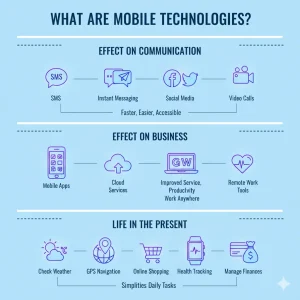
Effect on Communication:
Mobile technologies have changed how we talk to each other in a big way. Mobile devices have made it easier, faster, and cheaper to talk to people through SMS, instant messaging, social media, and video calls. No matter where you are, it’s easier than ever to keep in touch with friends, family, coworkers, and businesses.
Effects on Businesses:
Mobile technologies have given businesses new ways to reach customers and work more efficiently. Companies can improve customer service, get people more involved, and give people personalized experiences thanks to the rise of mobile apps. Mobile technologies also let businesses work from anywhere. Cloud-based tools let employees access documents, work together on projects, and keep track of their tasks from anywhere.
Life in the Present:
Everyday tasks are easier and more convenient thanks to mobile technology. Mobile devices help you save time and make things easier, whether you’re checking the weather, using GPS to find your way, or shopping online. They have also changed how we spend our free time, keep track of our money, and keep an eye on our health.
Types of Mobile Technology:
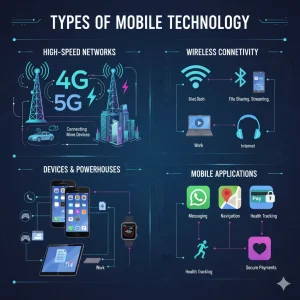
Networks for Mobile:
4G and 5G networks are the fast mobile networks that let devices connect to the internet. 5G, in particular, promises faster speeds, less lag, and the ability to connect more devices at once. This technology will enable the development of new innovations such as smart cities and self-driving cars.
Wi-Fi and Bluetooth let devices connect to wireless networks and share data over short distances. This makes it easier to move files, stream media, and keep a stable internet connection in different places.
Mobile Phones:
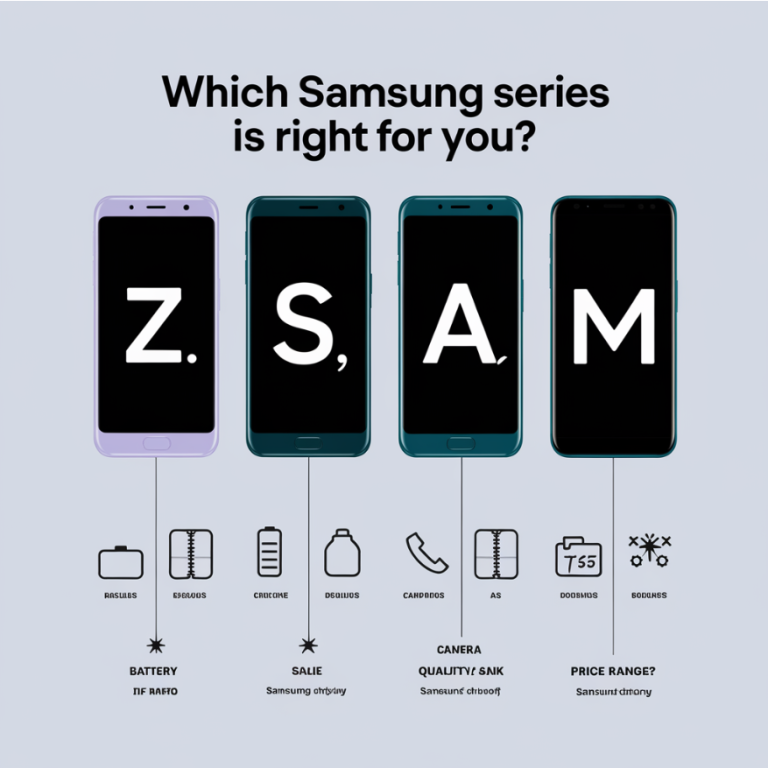
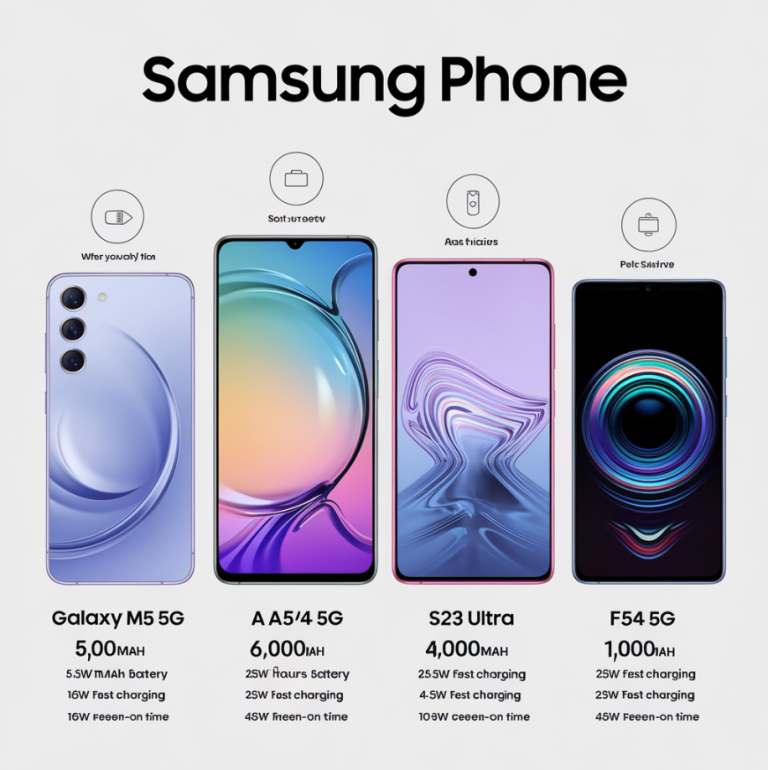
Smartphones are the most common and powerful mobile technology. They are multi-functional devices that allow users to make calls, browse the internet, play games, and perform work tasks all in one device. The iPhone and Samsung Galaxy series are two of the best examples.
Tablets and Wearables:
Tablets like the iPad and wearables like smartwatches (like the Apple Watch) are mobile devices that are made for certain purposes, like bigger screens for work or fitness tracking for people who care about their health.
Apps for Mobile Devices:
Mobile technology needs mobile apps to work. People can perform various tasks, access services, and interact with content directly from their phones by using apps such as WhatsApp for messaging and Google Maps for navigation. Businesses also use mobile apps to make the experience more personal for users, and they often work with mobile payment systems to make things easier.
Payment Systems on Mobile:
With mobile payment systems like Apple Pay, Google Wallet, and Samsung Pay, people can pay with their phones instead of having to carry around cash or credit cards. These systems use Near Field Communication (NFC) to make sure that transactions are safe.
Important Uses of Mobile Technology:
Talking to Each Other:
Modern communication relies heavily on mobile technologies. People can connect with one another in real time through text messages, phone calls, and social media using their mobile devices. People and businesses can also talk to each other face-to-face using video conferencing tools like Zoom and Skype, even if they are miles apart.
Business and Productivity:
Businesses have changed how they work because of mobile technology. Google Workspace and Microsoft 365 are two examples of cloud-based productivity tools that enable employees to work from any location. Mobile technologies make it easier than ever to work and collaborate from home. Project management apps like Trello and Slack help teams stay organized and on track no matter where they are.
Healthcare:
Mobile technologies are making telemedicine possible, which lets patients talk to doctors from a distance. Wearable devices like the Fitbit and Apple Watch and health-tracking apps keep track of important health information, like heart rate and sleep patterns, to help users stay healthy.
Entertainment Mobile technology has also changed the way people have fun. People can now watch movies, listen to music, and watch videos whenever and wherever they want thanks to streaming services like Netflix, Spotify, and YouTube. Mobile gaming is now a multi-billion-dollar business thanks to powerful processors and graphics.
Learning:
Mobile technologies are changing the way schools work. Students can learn on the go with educational apps, e-learning platforms, and digital textbooks. This makes education more accessible. Mobile technology is helping students learn in many ways, such as through Khan Academy, Duolingo, and other sites.
Problems with Using Mobile Technologies:
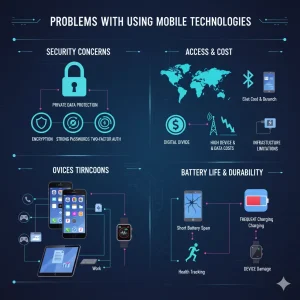
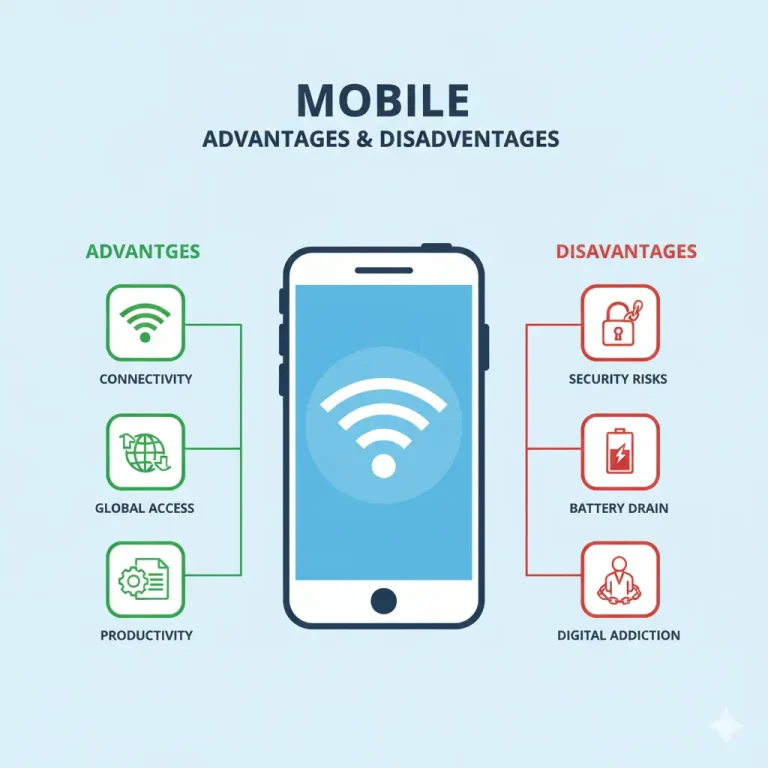
- Security: Security is still a big worry as more and more data is stored on mobile devices. Users and businesses need to be careful about protecting private information from things like data breaches and malware. Cybercriminals often go after mobile devices, so it’s important for users to use encryption, strong passwords, and two-factor authentication. For a deeper dive into the pros and cons of mobile technology, check out our article on Mobile Advantages and Disadvantages.
- Access and Cost: Even though mobile technologies are used all over the world, not everyone has the same access to them. In developing areas, high costs and problems with infrastructure can make it hard for people to use mobile devices or get online with their phones. This makes a digital divide, which means that not everyone uses technology.
- Battery Life and Durability of the Device: Even though mobile devices have gotten better, they still have trouble with battery life and durability. People depend a lot on their phones, and it can be a pain to have to charge them all the time. Also, as devices get more powerful, they tend to break down more easily, especially wearables.
The Future of Mobile Technologies: New Trends
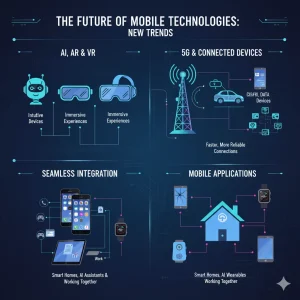
Artificial Intelligence (AI), Augmented Reality (AR), and Virtual Reality (VR) are all making progress, which bodes well for the future of mobile technologies. These technologies will make devices even more intuitive and immersive, which will improve the user experience. 5G networks will also be very important for making connections faster and more reliably, which will help IoT devices, self-driving cars, and more.
Possible Improvements:
In the future, mobile technologies might move toward fully integrated systems that let mobile devices, home appliances, and everyday tools all work together without any problems. Smart homes, AI assistants, and wearable tech are all likely to become big parts of the mobile tech scene in the following years.
FAQs:
What are technologies for mobile devices?
Mobile technologies are tools, systems, and devices that allow us to access information and services while on the go, such as smartphones, tablets, and other portable devices.
How do mobile technologies improve communication?
Mobile technologies enhance the speed and efficiency of communication by utilizing apps, messaging services, and social media. They also ensure that you can always connect to the internet from anywhere in the world.
What kinds of mobile technologies exist?
Mobile technologies encompass mobile networks such as 4G/5G, Wi-Fi, and Bluetooth; devices like smartphones and wearables; as well as various applications and payment systems.
What are some important ways in which mobile technologies are used in everyday life?
Some common examples of mobile technologies that people use every day include smartphones, GPS navigation apps, mobile payments, fitness trackers, and mobile games.
How do mobile technologies change the way businesses operate?
Mobile technologies improve business operations by enabling remote work, enhancing communication through collaboration tools, and facilitating mobile commerce and marketing.
What are the problems associated with using mobile technology?
Some common problems are worries about security, the digital divide, and problems with battery life and how long devices last.