What is Blockchain Technology and How Does It Work:
In today’s digital age, you might have heard the term “blockchain” being thrown around, especially in the context of cryptocurrencies like Bitcoin. But what exactly is blockchain technology, and how does it work? This technology has revolutionized various industries, offering new solutions for transparency, security, and decentralization. Let’s dive into understanding blockchain technology and how it operates in simple terms.
Understanding Blockchain Technology:
Blockchain is essentially a digital ledger or database used to record transactions across multiple computers. It ensures that the information recorded in the database is secure, transparent, and cannot be easily altered or tampered with. In simple terms, imagine a notebook where every transaction is written down in a clear, sequential manner. Once something is written in this notebook, it’s very difficult to erase or change.
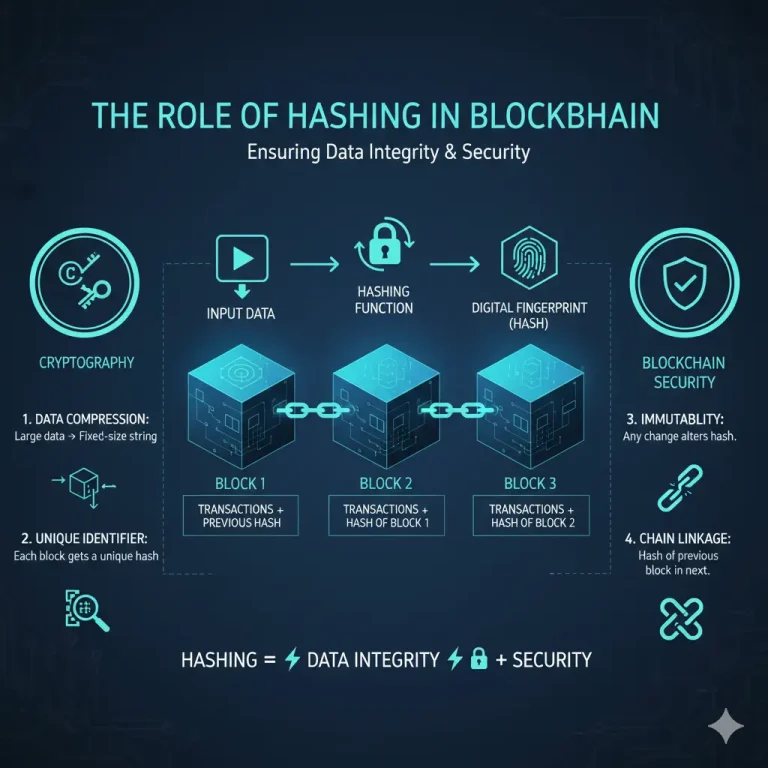
A blockchain consists of blocks of information that are linked together in a chain-like structure. Each block contains data about a transaction (such as who sent the information, when it was sent, and other relevant details) along with a unique code called a hash that helps link it securely to the previous block.
How Does Blockchain Work?

At the heart of blockchain technology lies the decentralized network. Unlike traditional databases, where a single authority (like a bank or a company) controls the information, blockchain uses a network of computers called nodes to manage and verify data.
- Transaction Initiation: When a user initiates a transaction (for example, sending money to someone), the details of the transaction are shared with the network of computers (nodes).
- Transaction Validation: Nodes in the network then validate the transaction using a consensus mechanism. The most common consensus mechanism is Proof of Work (PoW), where nodes (miners) solve complex mathematical puzzles to verify the transaction.
- Adding a Block to the Chain: Once validated, the transaction is grouped together with others into a block. This block is added to the blockchain, forming an immutable chain of blocks that cannot be altered.
- Completion of Transaction: The transaction is now complete, and everyone in the network has a copy of the updated blockchain.
Key Features of Blockchain
Decentralization
Blockchain technology is decentralized, meaning there’s no central authority or single point of control. This makes blockchain resistant to censorship and fraud. Instead, the data is distributed across the network of computers, ensuring that no single entity can manipulate the information.
Transparency
Each transaction on the blockchain is visible to all participants in the network, providing full transparency. This transparency ensures that every party involved can independently verify and track the transaction history.
Immutability
Once a transaction is added to the blockchain, it cannot be changed or deleted. This immutability feature ensures that the information stored on the blockchain is permanent and trustworthy, which is a major advantage in many industries, especially in finance and healthcare.
Types of Blockchains
There are various types of blockchain networks, each suited for different needs:
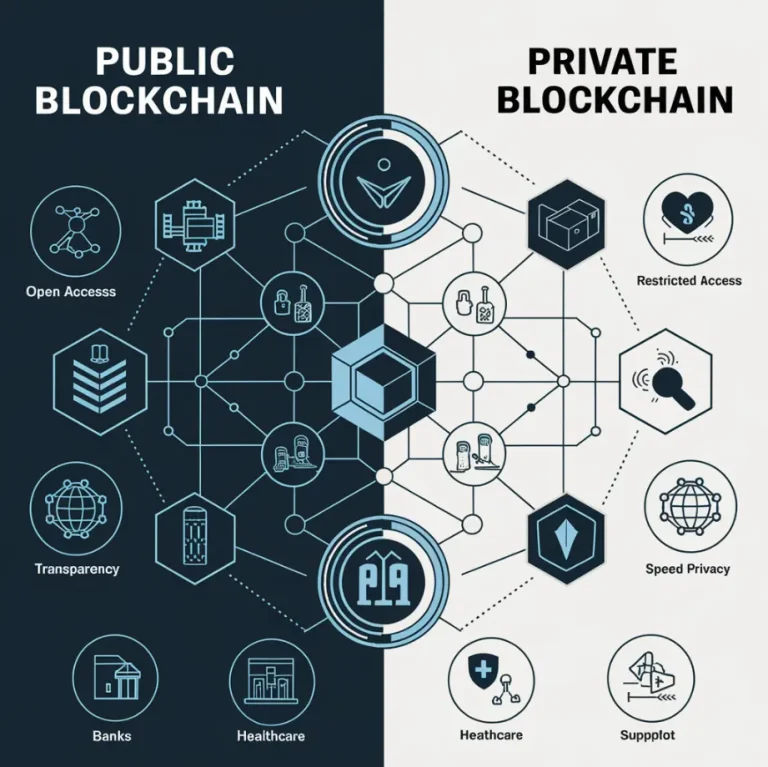
- Public Blockchains: These are open to everyone. Anyone can join the network, participate in the transaction process, and verify the data. Bitcoin is a great example of a public blockchain.
- Private Blockchains: These are restricted networks where only specific individuals or organizations can participate. These are often used in businesses where privacy and control over data are critical.
- Consortium Blockchains: These are hybrid blockchains where a group of organizations manages the network. They are often used for shared projects where multiple organizations work together but still need to maintain a level of privacy and control.
Is Blockchain Secure?
Yes, blockchain is considered very secure. The technology uses advanced cryptography to protect data. Each block is linked to the previous block using a unique hash, which makes it nearly impossible to alter the data without detection. Additionally, the decentralized nature of blockchain means that there’s no central point of failure, making it more resilient to hacking.
What Are the Benefits of Blockchain?
- Security: Blockchain’s decentralized and encrypted nature makes it highly secure against hacking and fraud.
- Transparency: All transactions are visible and verifiable, making it easy for participants to trust the network.
- Efficiency: Blockchain can streamline processes by reducing the need for intermediaries and speeding up transactions.
- Cost-Effective: It reduces the costs associated with traditional methods of data management and transaction processing.
What Are the Challenges of Blockchain?
Despite its advantages, blockchain technology faces some challenges:
- Scalability: As more users join the network, the blockchain can become slower, especially with networks like Bitcoin that require miners to solve complex puzzles.
- Energy Consumption: Proof of Work, used in networks like Bitcoin, requires a lot of computational power and electricity, raising concerns about its environmental impact.
- Regulation: Since blockchain operates independently of central authorities, governments and regulatory bodies are still figuring out how to manage its use.